All-on-4 and All-on-6 Stourbridge
A full arch of
teeth in one procedure
All-on-4 and All-on-6 use just four or six implants to support a complete, fixed set of teeth. No loose dentures, no gaps, no waiting years for a result.
Book an appointment →A complete smile,
fixed in one procedure
All-on-4 and All-on-6 are full arch implant solutions that replace an entire set of upper or lower teeth using just four or six strategically placed implants. The result is a fixed, non-removable set of teeth that functions like natural teeth, completed far more efficiently than placing individual implants for every missing tooth.

All-on-4 vs All-on-6
Both options replace a full arch of teeth on a small number of implants. The difference is in how many implants are used and what that means for stability and load distribution.
Book a consultation
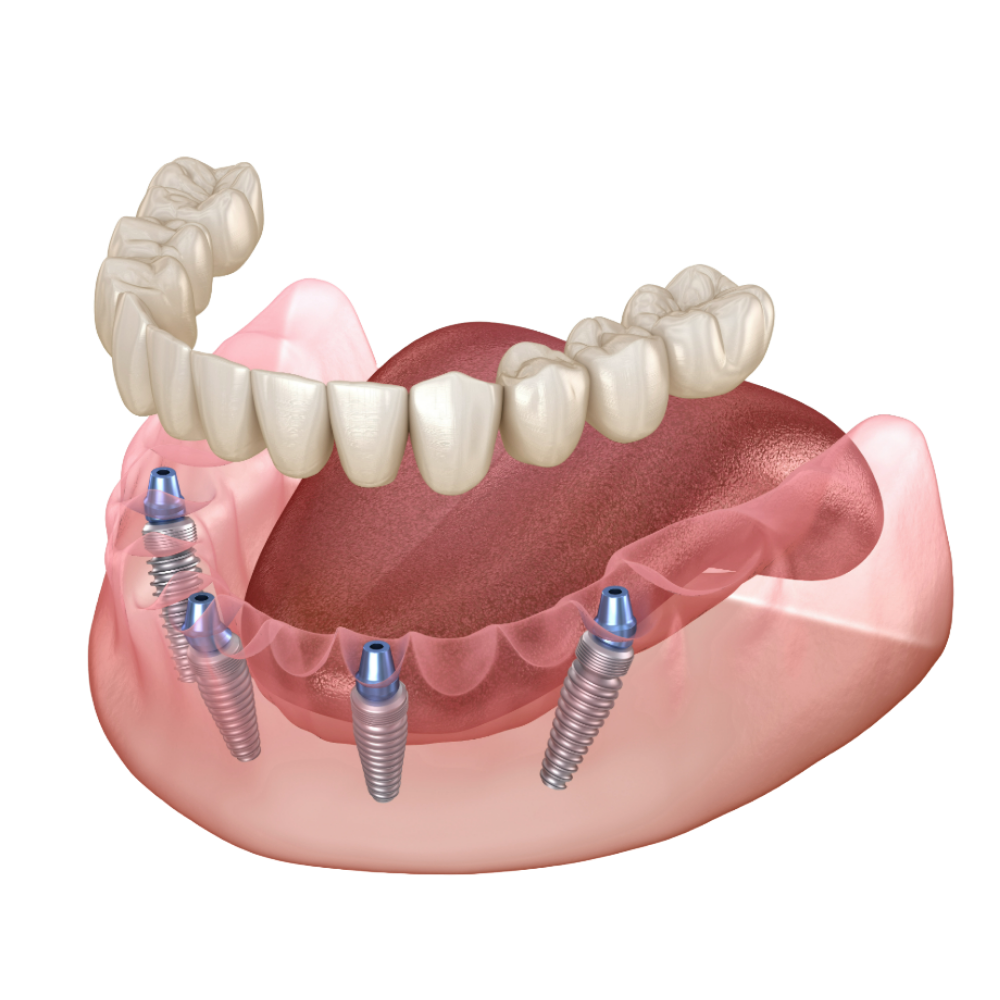
Four implants support a full arch of fixed teeth. Two implants are placed vertically at the front and two are angled towards the back of the jaw to maximise contact with available bone. This angled placement often eliminates the need for bone grafting, even in patients who have experienced significant bone loss.
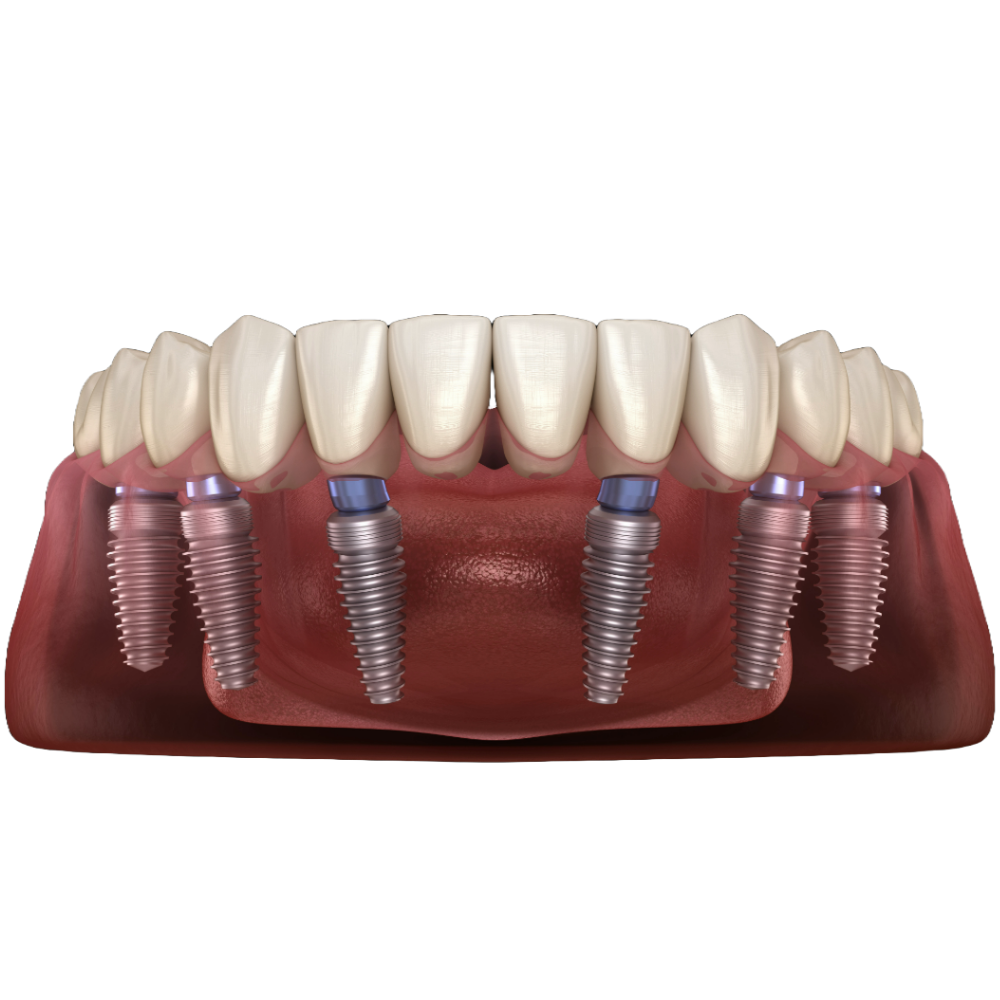
Six implants provide a wider base of support across the jaw, distributing the load more evenly and offering greater stability for the prosthesis. All-on-6 is typically recommended where bone density is sufficient and where extra support is preferable, particularly for the lower jaw where bite forces are higher.
Why All-on-4 and
All-on-6 are life-changing
For patients who have lost most or all of their teeth, no other treatment comes close to what All-on-4 and All-on-6 can achieve.
Traditional full arch replacement would require an individual implant for every tooth. All-on-4 and All-on-6 achieve the same result with a fraction of the implants, reducing cost, surgery time and recovery.
A fixed implant-supported arch functions like natural teeth. No movement, no slipping, no dietary restrictions. Patients can eat foods they have avoided for years and speak with complete confidence.
When teeth are lost, the jawbone begins to shrink. Implants stimulate the bone and halt this process. All-on-4 and All-on-6 preserve the remaining jaw structure and maintain facial shape over time.
The angled implant placement used in All-on-4 allows us to work with the bone that is available, often avoiding the need for grafting entirely. This makes the treatment accessible to patients who have been turned away elsewhere.
Unlike conventional or implant-retained dentures, All-on-4 and All-on-6 prostheses are fixed in place. They cannot be removed by the patient and feel nothing like a denture.
Patients consistently describe All-on-4 as among the most significant improvements to their quality of life they have ever experienced. The ability to smile, eat and talk without anxiety is profound.
A thorough assessment is required before treatment can begin. We evaluate bone levels, gum health and general suitability at your consultation and advise you honestly about your options.
What to expect
from treatment
All-on-4 and All-on-6 treatment takes place across several appointments. Here is what happens at each stage.
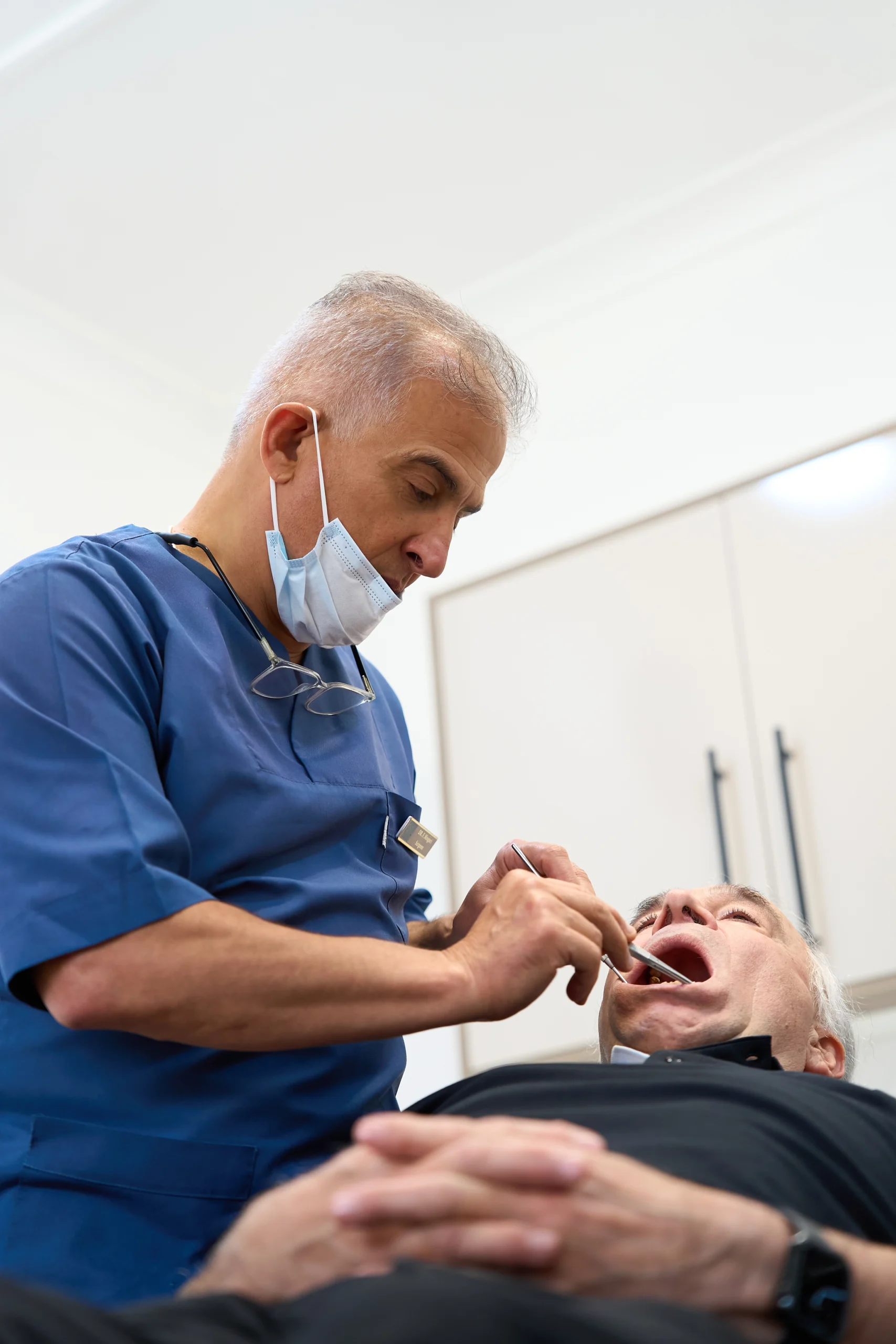
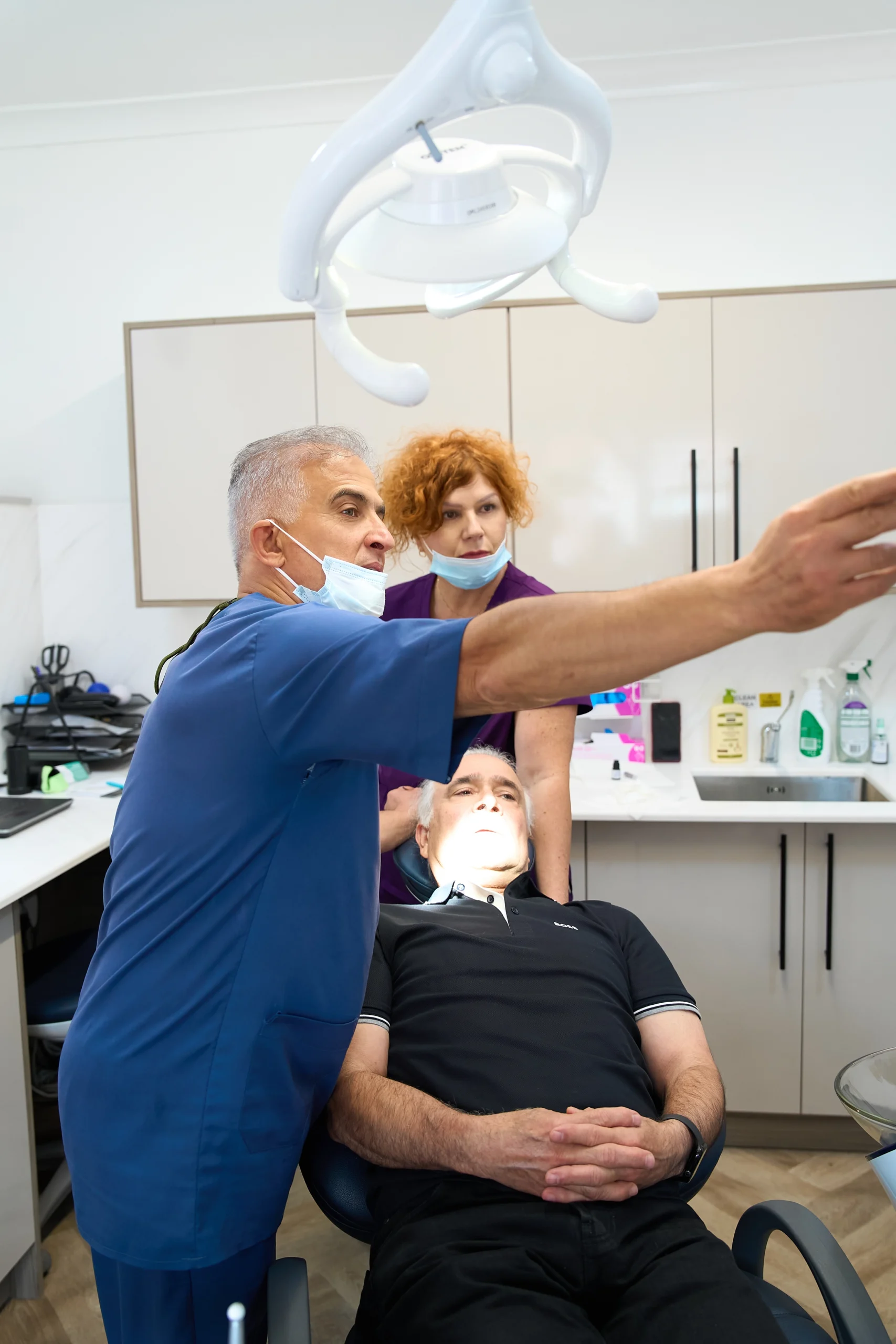
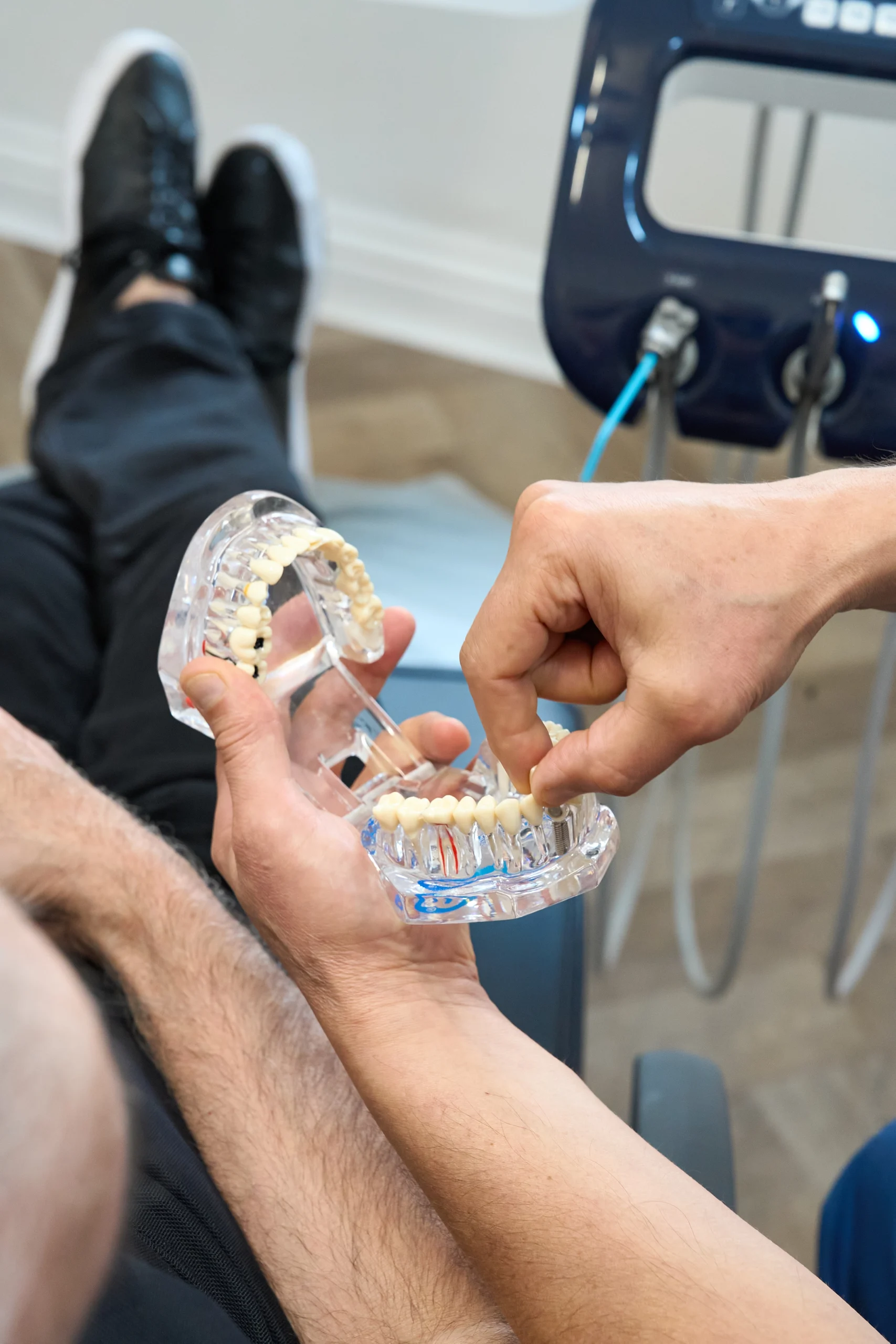
We carry out a thorough examination including X-rays and a full assessment of your bone density, gum health and jaw structure. We discuss your goals, explain both options clearly and advise whether All-on-4 or All-on-6 is more appropriate for your specific situation. A detailed written treatment plan and cost breakdown is provided before anything is agreed.
Using detailed scans and digital records, we plan the exact position and angle of each implant before surgery. All-on-4 in particular requires precise angling to maximise contact with available bone. Any remaining teeth that need to be removed are extracted before or on the day of surgery. If preparatory work is needed, this is completed first.
The implants are placed under local anaesthetic or sedation. In most cases, a temporary fixed prosthesis is attached to the implants on the same day, meaning you leave with a full set of teeth. This temporary prosthesis is worn during the healing period while the implants integrate with the bone.
Over three to six months, the titanium implants integrate with the jawbone. During this period, you wear the temporary prosthesis and attend monitoring appointments. Diet is restricted to softer foods to protect the healing implants. We guide you carefully through this phase and are available throughout.
Once osseointegration is confirmed, your final prosthesis is fabricated and fitted. This is a high-quality, custom-made arch designed to look and function as naturally as possible. The fit and bite are carefully adjusted before you leave. Follow-up appointments ensure everything has settled correctly and the result is exactly as intended.
Looking after your
new teeth
Swelling, bruising and discomfort in the days following surgery is normal and expected. Rest, a soft diet and the pain relief we provide will manage this. Avoid smoking and alcohol during the healing period as both significantly impair osseointegration.
During the osseointegration period, typically three to six months, a soft diet is essential to avoid placing excessive force on the healing implants. We provide detailed dietary guidance and are available to answer questions throughout this stage.
The fixed prosthesis requires careful cleaning around the implants and underneath the bridge. We show you exactly how to do this using the appropriate tools, including interdental brushes and a water flosser where needed. Hygiene appointments every six months are strongly recommended.
Regular check-ups allow us to monitor the condition of the implants and prosthesis, clean hard-to-reach areas and catch any issues early. With diligent home care and professional maintenance, an All-on-4 or All-on-6 result can last many years.
Smoking is the single biggest risk factor for implant failure. We discuss this honestly at consultation and strongly recommend stopping before and after treatment wherever possible.

Other implant solutions
Not every patient needs a full arch replacement. We offer single implants, multiple implants and implant-retained dentures for patients with different needs.
All-on-4 and All-on-6 FAQs
The questions we hear most often from patients considering full arch implant treatment in Stourbridge.
Most patients who have lost all or most of their teeth are candidates. Even patients with significant bone loss are often suitable for All-on-4 due to its angled implant placement. We assess this thoroughly at your consultation.
In most cases, yes. A temporary fixed prosthesis is attached to the implants on the day of surgery, so you leave with a full set of teeth. The final prosthesis is fitted once osseointegration is complete.
All-on-4 is fixed and non-removable. It functions like natural teeth, does not move or slip, requires no adhesives and preserves the jawbone. Dentures sit on the gums and accelerate bone loss over time.
From surgery to final prosthesis, treatment typically takes four to six months. Most of this is the healing and osseointegration period. The actual surgery day appointment is the most intensive part.
Cleaning requires attention around the implants and underneath the bridge. We provide a full demonstration and recommend the right tools, typically a water flosser and specific interdental brushes. Six-monthly hygiene appointments are essential.
Neither is universally better. All-on-4 is often more accessible for patients with bone loss. All-on-6 offers greater load distribution where bone density allows. We advise which is right for your specific anatomy at your consultation.
Most patients who have lost all or most of their teeth are candidates for All-on-4 or All-on-6. One of the key advantages of All-on-4 in particular is that the angled posterior implants allow us to work with bone that remains even after significant resorption, often without the need for bone grafting. Patients who have previously been told they are not suitable for implants due to bone loss are often still candidates. We assess bone levels, gum health and general health thoroughly at your consultation and advise you clearly about your options.
Book a consultation →In most cases, yes. A temporary fixed prosthesis is attached to the implants on surgery day, meaning you leave with a complete set of teeth. This temporary prosthesis is worn during the three to six month osseointegration period while the implants fuse with the jawbone. It is a functional set of teeth, not a cosmetic placeholder. Once integration is confirmed, your final high-quality prosthesis is fabricated and fitted.
All-on-4 is fixed, implant-supported and non-removable. It functions like natural teeth: no movement, no slipping, no dietary restrictions, no adhesives. Conventional dentures sit on the gum surface, which means they can move during eating and speech, and they accelerate jawbone resorption over time because the bone receives no stimulation. All-on-4 stimulates the bone through the implants, preserving facial structure. Most patients who have switched from dentures to All-on-4 describe the difference as transformative.
From initial consultation to final prosthesis fitting, treatment typically takes between four and six months. The surgery itself is a single appointment. The extended timeline is almost entirely the osseointegration period, during which you wear the temporary prosthesis. Preparatory treatment such as extractions, if needed, adds some time before surgery. We give you a clear, realistic timeline at the planning stage so you know exactly what to expect from start to finish.
Cleaning an All-on-4 or All-on-6 prosthesis requires a different approach from natural teeth. The key areas are the implant margins where the bridge meets the gum, and the underside of the bridge itself. We provide a full demonstration after treatment and recommend a water flosser for daily cleaning beneath the bridge, along with specific interdental brushes for the implant margins. A regular toothbrush for the surfaces of the teeth completes the routine. Six-monthly professional hygiene appointments are essential and are not optional.
Neither option is universally superior. All-on-4 uses angled posterior implants to maximise contact with available bone and is often the better choice for patients with reduced bone density, as it typically avoids the need for grafting. All-on-6 places two additional implants, distributing the load more evenly across the arch and providing greater long-term stability where bone density is sufficient. The lower jaw in particular generates considerable bite force, and All-on-6 is often preferred there. We advise which is right for your specific anatomy and situation at your consultation.