

Children's Dentist in Stourbridge
Great habits
start young
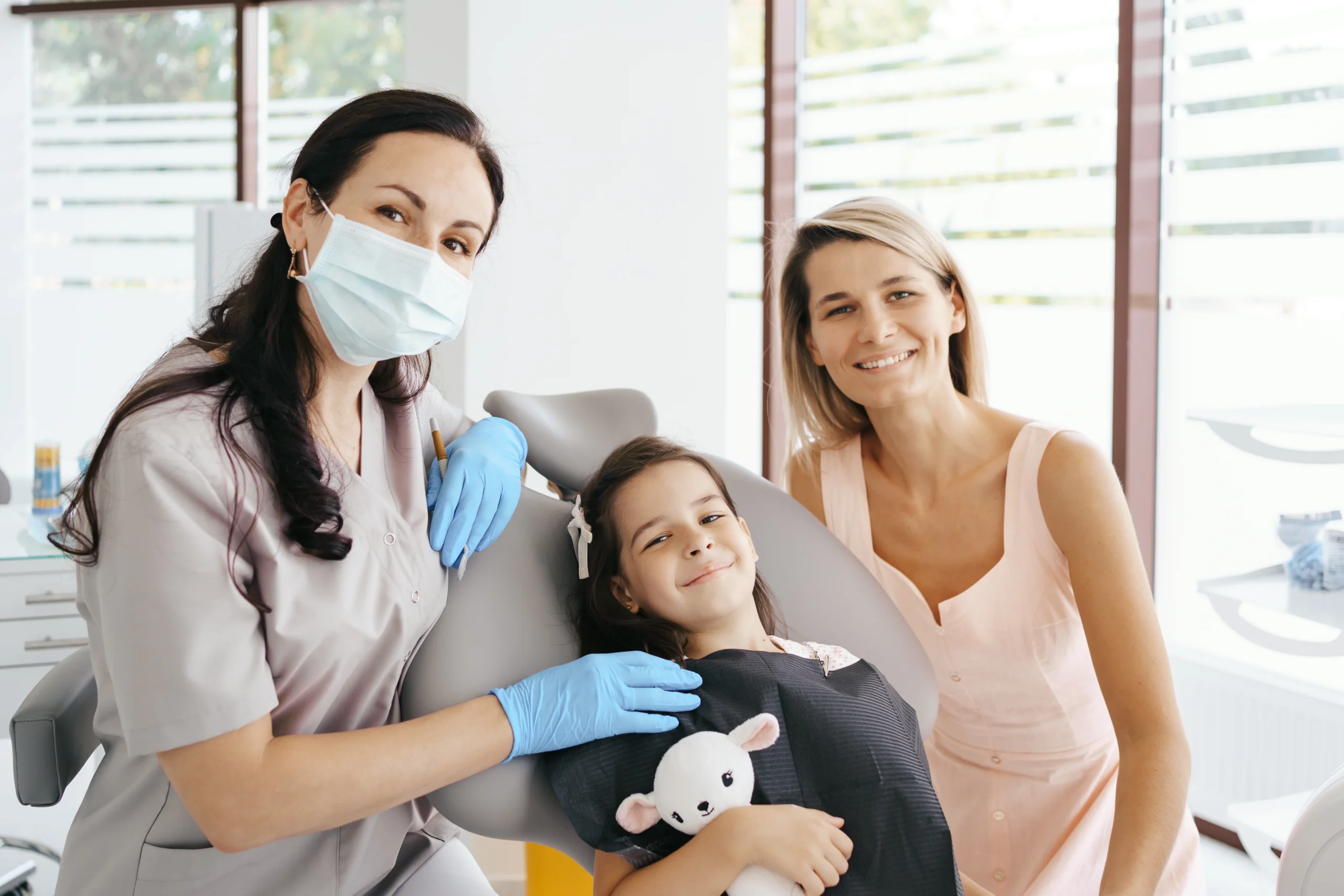
We take time with every child, working at their pace to build confidence and make the dental chair a place they feel safe. Good dental habits formed early last a lifetime.
Book an appointment →Building confidence
from the first visit
Children who have positive early experiences at the dentist carry that confidence into adulthood. We take our time with every child, explain everything in a way they understand and never rush. Our goal is for your child to leave feeling good about their visit, every time.

Why early dental
care makes a difference
The habits and attitudes children develop towards dentistry stay with them for life. Starting early, and starting well, makes everything easier down the line.
Children who visit the dentist regularly from a young age are far less likely to develop dental anxiety as adults. Positive early experiences shape their relationship with dental care for life.
Regular check-ups allow us to spot decay, crowding and developmental issues while they are still minor. Early intervention is almost always simpler and less disruptive than treating problems later.
Milk teeth hold space for adult teeth and affect speech development. Losing them too early through decay can cause crowding and alignment problems in the permanent teeth. They deserve proper care.
We teach children how to brush and clean their teeth in a way that sticks. Good habits formed before the age of ten are significantly more likely to be maintained into adulthood.
We give parents clear, practical advice on diet and sugary drinks in a way that is supportive, not judgmental. Small changes made early can prevent years of problems and treatment.
We track how your child's adult teeth are coming through, identify crowding or bite issues early and refer for orthodontic assessment if needed, at the right time.
When should my child first visit? We recommend bringing children from around their first birthday, or when their first tooth appears. The earlier, the better.
What happens at
your child's appointment
Every child's appointment is relaxed and unhurried. Here is what we cover and how we make sure your child feels safe and comfortable throughout.

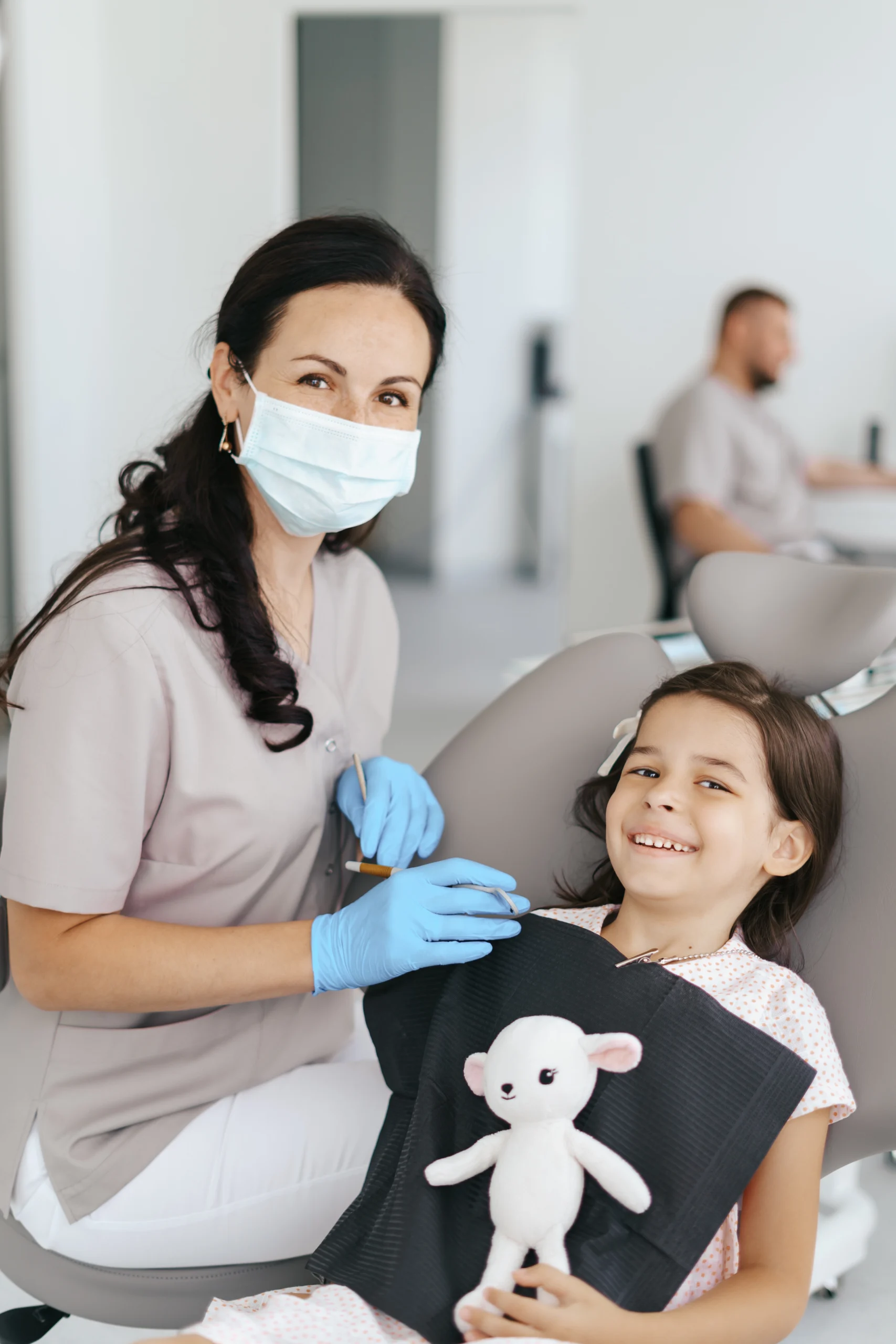
We greet children warmly and take a moment to let them settle into the environment before anything begins. Our waiting area is calm and welcoming. There is no hurry. Children who feel safe before the appointment even starts are far more relaxed in the chair.
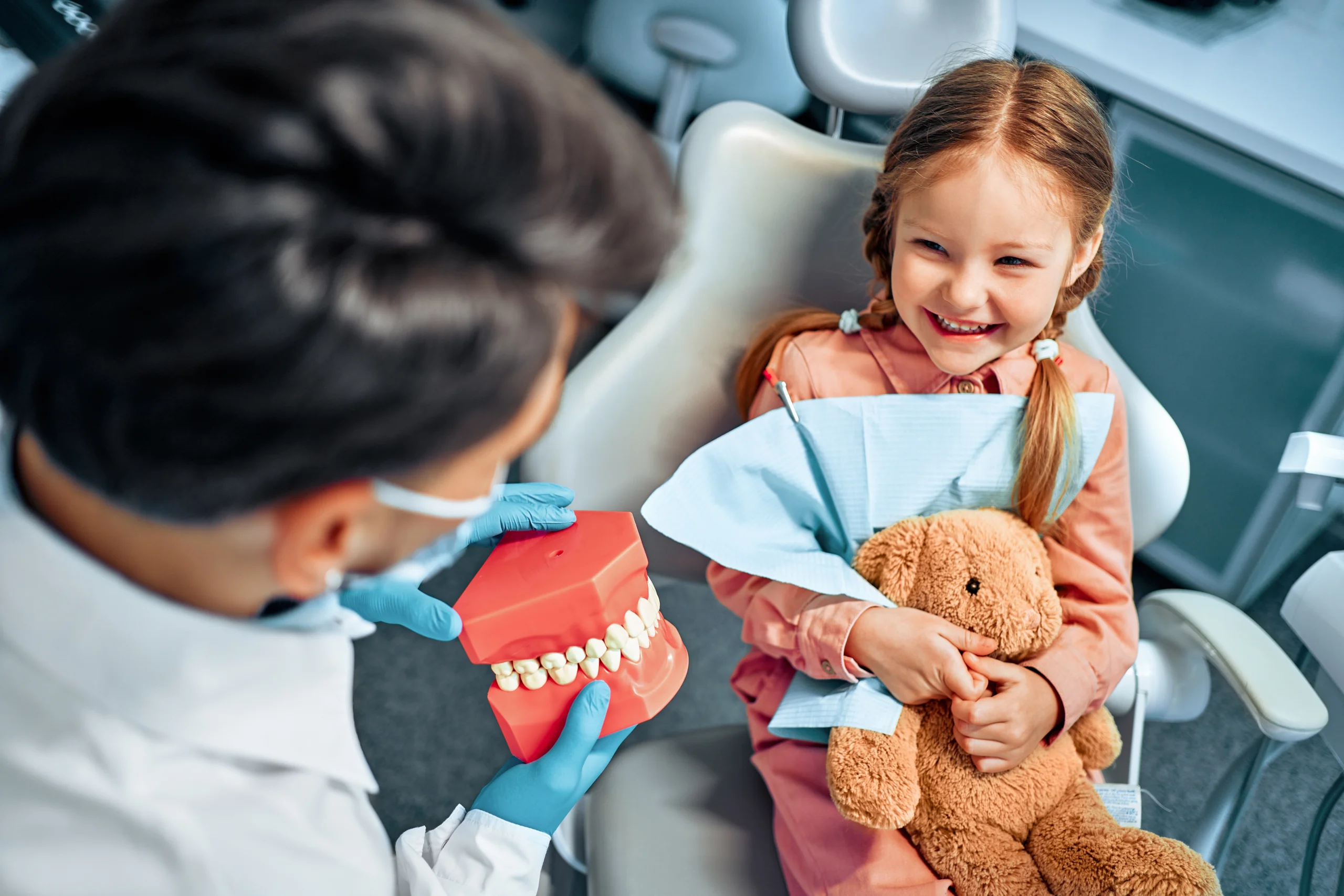
Before we do anything, we show your child the tools we use, explain what each one does in a way that makes sense to them, and let them ask questions. We call this show, tell and do. Building familiarity before examination means most children are completely at ease by the time we start.
We check all teeth and gums, monitor how the adult teeth are developing and look for any early signs of decay or alignment concerns. X-rays are taken when clinically needed. We involve your child throughout, explaining what we are doing in clear, friendly language.
We speak with you clearly about what we found, what is normal for your child's age, and what you can do at home to support their dental health. We discuss diet, brushing technique and any preventive treatments worth considering. Nothing is overcomplicated or overstated.
Keeping their teeth
healthy at home
Clean teeth as soon as they appear using a small smear of fluoride toothpaste. Use a soft baby toothbrush twice a day. Avoid putting babies to bed with a bottle of milk or juice.
Use a pea-sized amount of fluoride toothpaste. Brush twice a day and supervise brushing until your child can do it reliably themselves. Limit sugary snacks and drinks to mealtimes.
Introduce flossing or interdental brushes once adult teeth start to come through. Electric toothbrushes are excellent for children and often make brushing more engaging. Continue to check their technique.
Frequency of sugar exposure matters more than quantity. Limiting sweet foods to mealtimes rather than allowing constant snacking dramatically reduces the risk of decay.
Anxious about bringing your child? Many children are nervous for their first visit. Let us know beforehand and we will tailor the appointment to make it as easy as possible.

Ask us about
fissure sealants
Fissure sealants are a thin protective coating applied to the biting surfaces of back teeth. They seal the deep grooves where decay most often starts and are one of the most effective preventive treatments available for children.
Children's dentistry FAQs
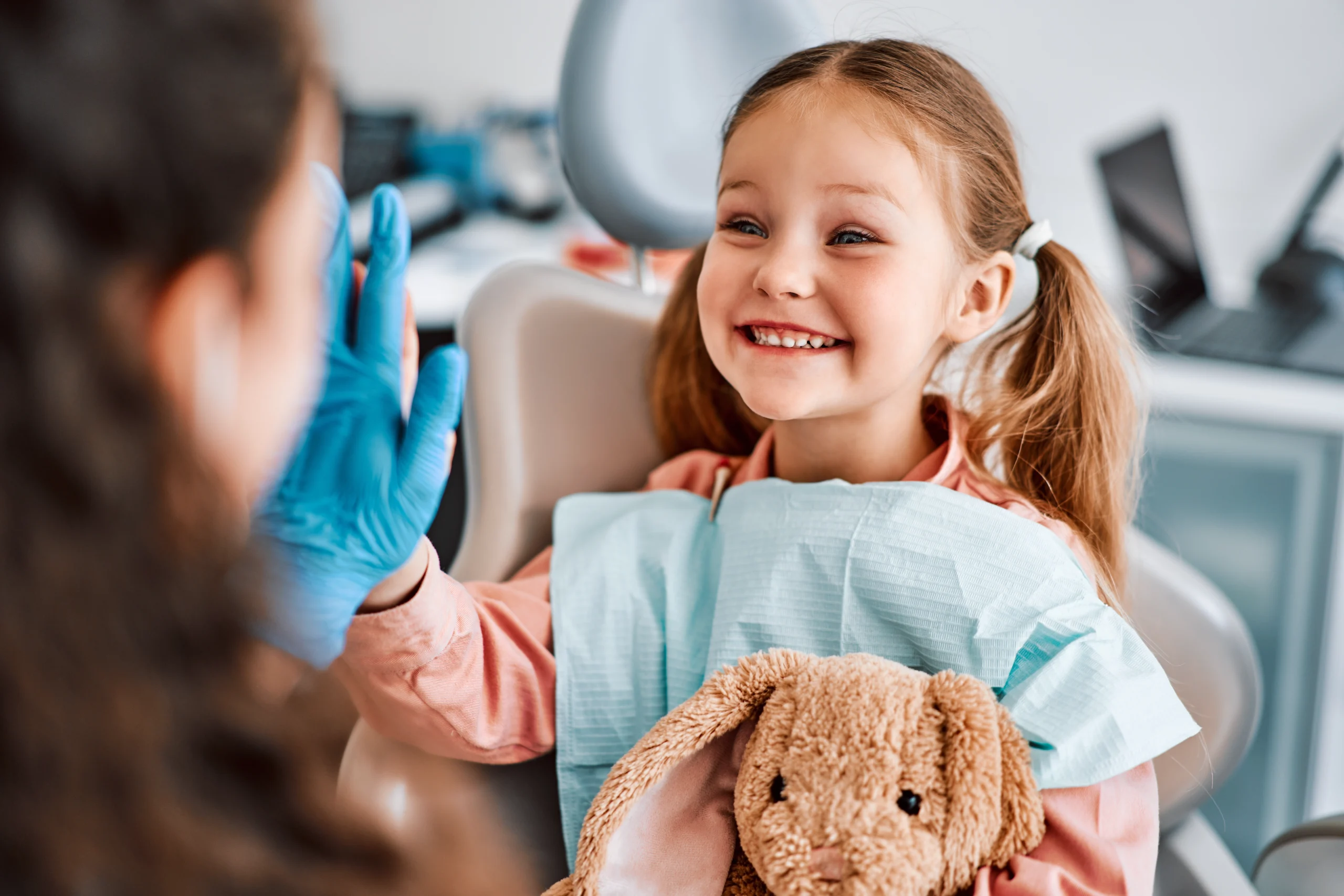
Questions we hear most from parents about bringing their children to Wollaston Dental Practice.
We recommend bringing children from around their first birthday, or as soon as their first tooth appears. Early visits are low-key and simply about familiarising your child with the environment.
Let us know when you book. We can adjust the appointment so there is more time, more explanation and no pressure. We never force a child to do anything they are not comfortable with.
Yes. Milk teeth hold space for adult teeth, affect speech development and matter for your child's comfort and confidence. Untreated decay can cause pain and lead to early loss, which affects the adult teeth coming through.
Fissure sealants are a thin protective coating applied to the deep grooves of back teeth where decay most commonly starts. They are quick, painless and very effective at reducing cavity risk in children.
Every six months is the standard recommendation for most children. If your child has a higher decay risk, we may recommend more frequent visits. We advise based on what we see at each appointment.
Yes, absolutely. Parents are always welcome in the surgery. We find that children are often more comfortable when a parent is present, particularly at the first few visits.
We recommend bringing children from around their first birthday, or as soon as their first tooth appears, whichever comes first. Early visits are relaxed and low-key — they are really just about letting your child get used to the environment, meet the team and feel comfortable in the chair. No treatment is needed at this stage. The earlier they start, the more natural it feels as they grow up.
Please let us know when you book so we can prepare the appointment accordingly. We give nervous children extra time, explain everything in a way they understand and never rush or pressure them. We use a show, tell and do approach, which means we introduce all the tools gradually before anything happens. Most nervous children leave far more relaxed than they arrived.
Yes, they do. Milk teeth are not just temporary placeholders — they hold space for the permanent teeth beneath them, play an important role in speech development and matter for your child's day-to-day comfort. Decay in milk teeth can cause significant pain and, if a tooth is lost too early, the surrounding teeth may shift and cause crowding problems when the adult teeth come through.
Fissure sealants are a thin, clear or tooth-coloured protective coating applied to the deep grooves and pits on the biting surfaces of back teeth. These grooves are the most common sites for childhood decay because they are difficult to clean properly with a toothbrush. The sealant is painted on and sets quickly, creating a smooth, easy-to-clean surface. The process is completely painless and takes only a few minutes per tooth.
We recommend a check-up every six months for most children. This allows us to monitor their dental development, catch any early decay, and reinforce good habits at regular intervals. Children with a higher risk of decay, or those undergoing orthodontic treatment, may benefit from more frequent visits. We always advise based on what we see and your child's individual situation.
Yes, always. We encourage parents to come into the surgery, especially for younger children and for first visits. Your presence makes a significant difference to how relaxed your child feels. We keep you fully informed throughout and explain everything to both you and your child at the same time. You are never left waiting outside wondering what is happening.