
Bad teeth
What causes them, what they do to your health, and what treatment actually looks like
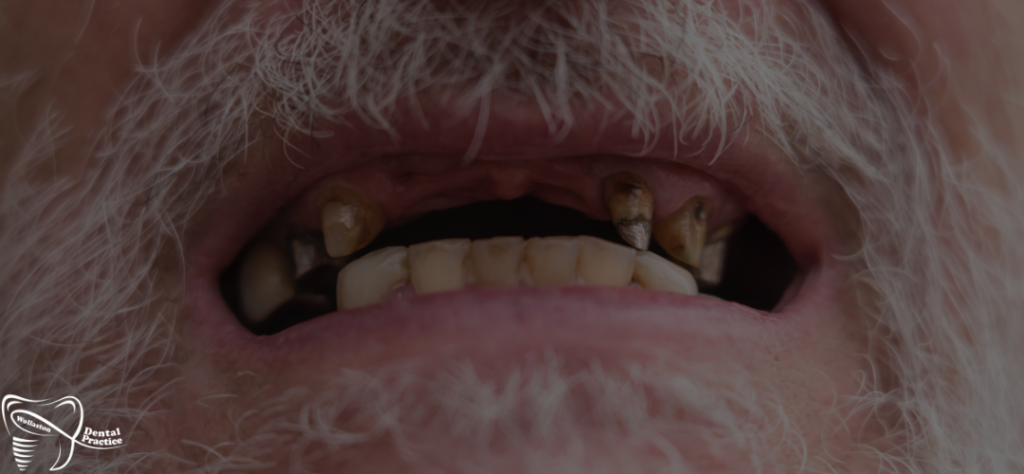
Most people use the phrase bad teeth to describe something specific to their own situation. For one person, it means teeth that are severely stained or discoloured. For another, it means decay that has reached the stage of visible breakdown. For someone else, it means crowded or misaligned teeth, or teeth with significant gaps, or teeth that have been lost entirely to years of gum disease.
The phrase covers a lot of ground. The clinical picture behind it varies enormously. And the treatment, or the combination of treatments, that addresses it depends entirely on what is actually there.
What is consistent across all of these presentations is the experience. Bad teeth are not just a dental problem. They affect how people smile, whether they smile at all, how they speak, what they can eat, and, for a significant number of patients, their willingness to seek professional help, because they are embarrassed about what will be found.
This article is for anyone in that position. It explains what causes bad teeth in an honest, non-judgmental way, what the clinical consequences are beyond the cosmetic ones, and what treatment from the starting point of a damaged or neglected dentition actually involves.
At Wollaston Dental Practice in Stourbridge, led by Dr Mohammed Ihsan GDC No. 304200, we welcome patients at every stage of dental health, including those who have not seen a dentist for a long time and are unsure what to expect.
What bad teeth actually means: a clinical breakdown
Because the phrase covers so many different presentations, it is worth separating what bad teeth typically refers to into its distinct components.
Tooth decay
Dental caries, the progressive destruction of tooth structure by bacterial acid, is the most common cause of bad teeth globally and in the UK. Decay begins invisibly, as demineralisation of the enamel surface, and progresses through the enamel into the dentine beneath. Once in the dentine, it advances faster. Once it reaches the pulp (the nerve), it causes infection, acute pain, and ultimately tooth loss if untreated.
The appearance of decayed teeth varies with the stage: a white spot lesion in early decay, a dark cavity in established decay, a grey or black discolouration in teeth with dead or infected pulps. What does not vary is the direction of travel without treatment: consistently downhill.
Discolouration and staining
Teeth that are deeply stained or discoloured from tobacco, coffee, tea, red wine or dietary sources, or that have developed intrinsic discolouration from trauma, medications or developmental causes, are often described by patients as bad teeth even when they are structurally sound. The distinction is important clinically: structurally sound teeth with surface staining are a very different situation from heavily decayed teeth, and the treatment for each is completely different.
Gum disease and its effects
Gum disease causes the bone and connective tissue supporting the teeth to deteriorate. Teeth that appear to be getting longer (recession), that are moving, or that feel loose are showing the effects of advanced periodontal disease. The teeth themselves may be structurally intact; the problem is in the supporting structures.
Missing teeth
Whether from extraction, trauma or decay, missing teeth are part of what patients describe as bad teeth, and they create their own set of clinical consequences that extend well beyond the gap itself.
Structural damage
Heavily worn, fractured, chipped, or eroded teeth, whether from acid erosion, grinding (bruxism) or physical trauma, represent structural compromise that may or may not involve decay but which still requires clinical attention to prevent further deterioration.
Why bad teeth happen: the honest causes
Understanding why bad teeth develop matters for treatment planning and for prevention. The causes are not always what people assume, and some of them are significantly beyond a patient’s control.
Diet and sugar frequency
The bacteria responsible for decay produce acid when they ferment sugars. It is the frequency of sugar exposure, not the volume consumed, that matters most. Three meals a day with sweet food at each is far less damaging than constant snacking on sugary food or drink throughout the day, because the mouth needs approximately 30 to 40 minutes to return to a neutral pH after each acid challenge. Patients who graze on biscuits, drink sugary drinks slowly over hours, or sip fruit juice throughout the day are exposing their teeth to repeated acid cycles with inadequate recovery time.
Oral hygiene
Plaque that is not removed from the tooth surfaces and gum margins continues to accumulate and harden into tartar, which harbours the bacteria driving both decay and gum disease. Brushing alone does not address the interdental spaces where most early decay develops. Both are necessary, and both need to be consistent.
Genetics
There is a genuine genetic component to dental health. Enamel thickness, saliva composition, immune response to oral bacteria, and even the specific bacterial species that colonise the mouth all have hereditary elements. Some patients genuinely are more susceptible to decay and gum disease than others for reasons entirely beyond their control. This does not mean the outcome is inevitable, but it does explain why some patients who care carefully for their teeth still develop significant problems while others with apparently chaotic habits develop very few.
Dry mouth from medication
Over 400 commonly prescribed medications list dry mouth as a side effect. Saliva is the primary mechanism by which the oral environment is maintained: it neutralises acid, remineralises enamel, and delivers antimicrobial proteins to the gum tissue. When saliva flow is significantly reduced, the protective system fails, and decay and gum disease can develop rapidly even in patients with reasonable oral hygiene.
Medical conditions
Diabetes, autoimmune conditions, chemotherapy-related changes and various systemic diseases all affect oral health. Poorly controlled diabetes, in particular, drives more severe gum disease and impairs healing after any dental treatment. Medical history is a core part of any dental assessment for exactly this reason.
Dental anxiety and avoidance
One of the most significant causes of bad teeth is the avoidance of dental care. Patients who develop dental phobia after a difficult childhood experience, or who simply put off attending until something is painful, consistently present with more complex and more extensive dental disease than those who attend regularly. Decay caught at a small stage costs a fraction of the treatment needed once it has progressed to the nerve. Gum disease caught as gingivitis is reversed with professional cleaning; the same disease caught years later as established periodontitis has produced bone loss that cannot be reversed.
The health consequences that go beyond appearance
Bad teeth are often framed as an aesthetic problem. The clinical reality is considerably broader.
Chronic pain
Advanced decay, abscesses and gum disease all produce pain, sometimes acute and sometimes chronic. The quality of life impact of persistent dental pain is substantial and underestimated: it affects sleep, appetite, concentration, mood and work.
Eating and nutrition
Missing teeth and severely damaged teeth significantly reduce the range and volume of food that can be eaten comfortably and effectively. Patients with multiple missing or damaged teeth typically shift to softer, more processed foods, reducing dietary fibre and overall nutritional quality over time.
Speech
Front teeth and the relationship between teeth and lips play a direct role in speech. Missing or damaged front teeth affect specific sounds, sometimes significantly.
Gum disease and systemic health
The associations between gum disease and cardiovascular disease, diabetes, adverse pregnancy outcomes and respiratory conditions are among the most consistently evidenced relationships in modern dental medicine. The bacteria responsible for periodontitis enter the bloodstream through inflamed gum tissue and contribute to systemic inflammatory load. This is not a marginal effect: the link between severe gum disease and cardiovascular outcomes in particular is now well established enough to be part of routine medical discussion.
Mental health and confidence
The psychological impact of bad teeth on self-confidence, social engagement and professional relationships is real and significant. Patients who are ashamed of their teeth report modifying how they smile, avoiding social situations, and experiencing significant anxiety about any interaction where their teeth might be noticed. This is not vanity: it is a genuine quality-of-life effect that dental treatment can meaningfully address.
What treatment for bad teeth actually involves
This is where many patients have the most uncertainty, because they do not know what to expect or what is actually possible.
The starting point is always a proper dental check-up that establishes exactly what is present: X-rays to assess decay depth and bone levels, a systematic tooth-by-tooth examination, a gum pocket assessment, and a soft tissue screen. From that, a clear clinical picture is established and a staged treatment plan is made.
The treatment sequence follows a consistent clinical logic:
First: eliminate pain and infection
Acute pain and infection are addressed before anything else. An abscess that is causing severe pain needs to be drained and the source treated before any elective treatment can proceed. Root canal treatment saves the tooth where it is feasible: removing the infected pulp, cleaning and sealing the canal system, and restoring the tooth. Where the tooth cannot be saved, tooth extraction removes the source of the infection. Both are carried out under local anaesthetic. Neither should be the ordeal that dental anxiety anticipates.
Second: stabilise the dental disease
Active decay and gum disease must be brought under control before any cosmetic or restorative work is started. Placing expensive cosmetic restorations on teeth affected by active gum disease or untreated decay is placing aesthetic work on a failing foundation.
Stabilisation involves treating all active cavities with fillings, carrying out any necessary extractions, and completing a course of professional gum treatment that controls the periodontal disease. For patients with significant gum disease, this may be several appointments of deep cleaning, with reassessment afterwards to confirm the disease is under control.
Third: restore function
Once the mouth is stable, restorative treatment addresses the function and structural integrity of the teeth. Crowns for heavily broken down teeth, bridges or implants for missing teeth, dentures where appropriate. Dental check-ups at regular intervals maintain that stability.
Fourth: improve aesthetics where indicated
Once function is restored, aesthetic treatment can be planned: composite bonding, porcelain veneers, teeth whitening, orthodontics. These are applied to a stable, healthy oral environment, which is what gives them the best chance of lasting.
This sequence is not negotiable for clinical reasons: it is the order in which treatment produces the best outcomes.
The no-judgement reality of presenting with bad teeth
The most common thing patients who have avoided the dentist for years say when they finally attend is some version of: “I know it is bad.”
They do. They have been living with it, often for years. The anticipation of judgement is frequently what has kept them away.
The clinical team at Wollaston Dental Practice has seen the full spectrum of dental presentations, including patients who have not attended for a decade or more and whose teeth have deteriorated significantly during that time. The response is always the same: a clear-eyed assessment of what is present, an honest explanation of what can be done and in what order, and a treatment plan built around what is actually achievable.
There is no lecture. There is no comparison to what things would have been like if attendance had been earlier. There is only the starting point of where things are now, and a realistic plan for improving them.
If you have bad teeth and have been putting off attending, call Wollaston Dental Practice on 01384 438 143 or view our treatment fees at our fees page.
Emergency care for acute dental problems
When bad teeth reach an acute crisis point, such as severe toothache, a dental abscess, or a tooth that has broken, the emergency dental service at Wollaston Dental Practice provides same-day assessment and treatment. Emergency care addresses the immediate problem promptly, and the appointment is also the starting point for planning the longer-term treatment.
Dr Mohammed Ihsan, whose background includes weekend emergency dentistry in a busy NHS environment alongside his current postgraduate diploma in oral surgery and implantology, brings specific emergency assessment experience to every urgent presentation.
The bottom line
Bad teeth are not a single condition: they are a range of clinical presentations, each with specific causes, specific consequences and specific treatments. What all of them have in common is that they are addressable, and that the earlier they are addressed, the more conservative and less expensive the treatment required.
The starting point is a proper dental check-up that gives an accurate, honest picture of what is there and what needs to happen. At Wollaston Dental Practice in Stourbridge, that is exactly what we provide.
Disclaimer
The information in this article is intended for general educational guidance only and does not constitute personalised dental advice. For an accurate assessment of your specific dental situation, please book an appointment with a qualified dental professional
Wollaston Dental Practice is a private dental practice at 27 High Street, Wollaston, Stourbridge, DY8 4NJ, led by Dr Mohammed Ihsan GDC No. 304200, Master’s in Dentistry, member of the Association of Dental Implantology. We offer dental check-ups, dental hygienist appointments, emergency dental care, root canal treatment, tooth extractions, dental implants, Invisalign, composite bonding, porcelain veneers, teeth whitening, dental crowns, smile makeovers and facial aesthetics. Call 01384 438 143.
Frequently asked questions
Can bad teeth be fixed?
In the vast majority of cases, yes, to a meaningful degree. The specific possibilities depend on the severity and nature of the damage. Decayed teeth can often be saved with fillings, root canal treatment or crowns. Severely damaged teeth that cannot be saved are replaced with implants, bridges or dentures. Discoloured teeth can be whitened or covered with bonding or veneers. Misaligned teeth can be straightened. The honest answer to what is possible in a specific case comes from a dental check-up with X-rays and a proper clinical assessment.
Why do some people have worse teeth than others despite similar hygiene habits?
Genetics plays a significant role. Enamel thickness, saliva composition, the specific bacteria that colonise the mouth, and the immune response to those bacteria all have hereditary components. Some patients are genuinely more susceptible to decay and gum disease than others through no fault of their own. Medical conditions and medications also play a major role: dry mouth from medication is one of the most common and underrecognised contributors to rapid dental deterioration. A dental hygienist assessment can identify the specific risk factors in your situation.
What should I do if I am embarrassed about my teeth but have not been to the dentist for years?
Make the appointment. This is far easier to say than to do, and the anxiety around it is entirely understandable. The clinical response to whatever is found is practical and non-judgmental: an assessment of what is present, an honest explanation of the options, and a staged treatment plan that starts from where things are now. Wollaston Dental Practice welcomes patients at every stage of dental health, including those who have not attended for a long time. If a dental emergency is driving the visit, the emergency dental service provides same-day care for acute presentations.
Does having bad teeth affect my general health?
Yes, in clinically significant ways. Advanced gum disease is associated with cardiovascular disease, impaired glycaemic control in diabetic patients, adverse pregnancy outcomes, and respiratory conditions. Dental infections that are untreated can spread beyond the tooth and, in rare but documented cases, become life-threatening. The chronic pain of severe dental disease affects sleep, nutrition and mental health. Addressing bad teeth is not purely a cosmetic decision.
How much does it cost to fix bad teeth?
It depends entirely on the number and nature of the treatments required, which is only established after a proper clinical assessment. Wollaston Dental Practice provides a full, transparent treatment plan with costs confirmed before any work begins. All our treatment fees are listed on our fees page. Complex treatment is typically staged over multiple appointments, which also allows the cost to be spread over time.