
Gum conditions
What they are, how they develop, and why acting early changes everything
Most people think about their teeth when they think about dental health. The gums tend to be an afterthought, which is part of why gum conditions are so common and so frequently caught late.
This is a mistake worth correcting, because the gums and the bone beneath them are what hold the teeth in place. A tooth with a small chip or an old filling can still function for decades. A tooth that has lost its supporting bone cannot, regardless of how structurally intact the tooth itself is. The gums matter in a way that tends to become very clear, unfortunately, only once a significant problem has developed.
This article covers the most clinically significant gum conditions: what they are, how to recognise them, what causes each one, and what the appropriate treatment looks like. The aim is to give a clear clinical picture that helps you understand what might be happening in your own mouth and when to act.
At Wollaston Dental Practice in Stourbridge, led by Dr Mohammed Ihsan GDC No. 304200, Master’s graduate in Dentistry from the University of Szeged and member of the Association of Dental Implantology, gum health is assessed as a core component of every clinical examination. Here is what you need to know.
What healthy gums actually look like
Before going through what goes wrong, it is worth establishing what healthy gum tissue looks like clinically, because many people have no reference point for it.
Healthy gingiva is:
Pale pink, though the shade varies naturally with skin tone. Firmer than it appears, because it is tightly bound to the underlying bone. Stippled (a slightly orange-peel texture) on the attached gingiva. Well-contoured around each tooth, filling the spaces between teeth with pointed papillae. Entirely non-bleeding when touched or flossed.
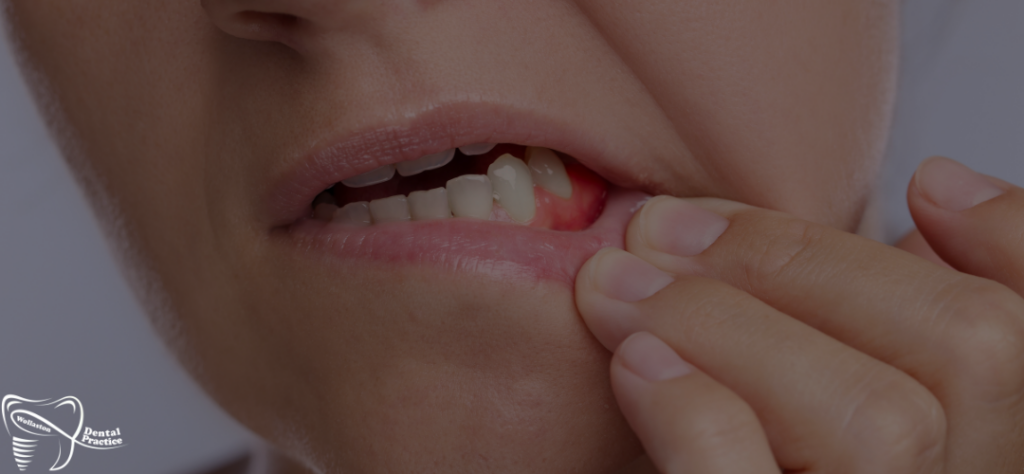
That last point is the one most people get wrong. Bleeding gums are not normal. They are not an inevitable consequence of flossing. Healthy gum tissue does not bleed from light contact. When gums bleed during brushing or flossing, they are already inflamed.
Gingivitis: the starting point for most gum problems
Gingivitis is inflammation of the gingiva, the gum tissue surrounding the teeth. It is the most common gum condition, affecting the majority of adults to some degree, and it is entirely reversible with appropriate treatment.
The cause is almost always plaque: the soft, sticky biofilm of bacteria that forms continuously on every tooth surface. Where plaque is not removed by brushing and interdental cleaning, it matures over 24 to 72 hours, and the bacterial species within it produce toxins that trigger an immune response in the surrounding gum tissue. The response involves increased blood flow to the area, dilation of blood vessels and recruitment of inflammatory cells. The result is the red, swollen, bleeding gum tissue that characterises gingivitis.
Clinically, gingivitis is confined to the gum tissue itself: the bone beneath is not affected, the attachment between the gum and the tooth root is not compromised. This is what makes it reversible, a status that changes once it progresses.
The treatment for gingivitis is professional cleaning combined with improved home care. A dental hygienist appointment removes the plaque and tartar (hardened, mineralised plaque that cannot be removed by brushing) that is driving the inflammation. Within two to four weeks of consistent professional cleaning and thorough home care, gingivitis typically resolves completely, and the gum tissue returns to its normal healthy state.
Gingivitis that is not treated does not stay as gingivitis indefinitely. In susceptible individuals, it progresses.
Periodontitis: when gum disease becomes destructive
Periodontitis is the advanced form of gum disease, and it is the leading cause of tooth loss in adults globally. It is what gingivitis becomes when the bacterial infection extends below the gum line and begins to destroy the structures that support the teeth.
The transition from gingivitis to periodontitis involves bacterial species that are able to penetrate the sulcus (the shallow crevice between the tooth and gum) and establish themselves in the deeper periodontal pocket that forms as the gum detaches from the root surface. These bacteria, predominantly gram-negative anaerobes including Porphyromonas gingivalis, Tannerella forsythia and Treponema denticola, produce enzymes that break down the connective tissue attaching the gum to the root. The immune response to these bacteria also drives bone resorption: the body destroys its own bone in the process of trying to eliminate the infection.
The clinical result is progressive attachment loss and bone destruction. The gum recedes as the bone resorbs beneath it. Pockets deepen. Roots become exposed. Teeth begin to shift, become mobile, and in advanced cases are lost.
The defining clinical feature of periodontitis is that it is silent. Unlike most conditions that destroy tissue, it produces minimal pain during its progression. Patients with significant bone loss often have no idea anything is wrong until a tooth becomes mobile or a dental X-ray reveals how much bone has already gone. This is why regular dental check-ups that include gum pocket depth measurements and X-rays are clinically essential, not just a routine formality.
Treating periodontitis
The cornerstone of periodontitis treatment is root surface debridement: professional cleaning beneath the gum line, using specialised instruments to remove the calculus and bacterial biofilm from the root surfaces within the pockets. This is the gum treatment that makes the clinical difference, carried out by a dentist or hygienist with appropriate training.
Root surface debridement is typically carried out under local anaesthetic for deeper pockets, ensuring the procedure is comfortable. Multiple appointments are often needed to treat all areas systematically.
The results of professional gum treatment are measurable: pocket depths reduce, bleeding on probing decreases, and the inflammatory process is brought under control. The bone that has already been lost does not regenerate without specialist surgical intervention, but the destruction stops, and the teeth that remain can be retained long-term with appropriate maintenance.
For patients with advanced bone loss and teeth that cannot be saved despite treatment, tooth extraction becomes the appropriate clinical decision, followed by discussion of replacement options.
The maintenance phase
Periodontitis is a managed condition, not a cured one. Once the active treatment phase is complete, regular maintenance appointments at three to four monthly intervals are the clinical standard. The bacteria responsible for periodontitis re-colonise treated surfaces within weeks of cleaning. Without ongoing professional maintenance, the disease reactivates.
The dental hygienist plays a central role in this maintenance: removing the new deposits before they can cause further damage, monitoring pocket depths and bleeding scores for any signs of disease reactivation, and providing personalised home care guidance.
Gum recession: the visible consequence
Gum recession, where the gum tissue pulls back from the tooth to expose the root surface, is one of the most common gum conditions seen in practice. It is not a disease in itself but a clinical sign, and it has multiple possible causes.
Periodontitis-driven recession follows the bone loss: as the supporting bone resorbs, the gum tissue follows. This type of recession is a clinical indicator of the extent of bone destruction.
Toothbrush abrasion is the other major cause. Brushing too hard with a medium or hard bristle brush, using a horizontal scrubbing motion, causes mechanical trauma to the gum margin. Over years, the gum tissue recedes at the sites of most aggressive brushing, typically the prominent upper canines and premolars.
Thin periodontal biotype (thin, fragile gum tissue from genetic predisposition) makes patients more susceptible to recession from any cause.
Recession exposes the root surface, which is covered by cementum rather than enamel. Cementum is more porous, softer and considerably more sensitive than enamel. Exposed root surfaces are more vulnerable to decay, more sensitive to temperature, and in some cases contribute to significant aesthetic concerns.
Gum treatment for recession depends on its cause. Where aggressive brushing is the driver, switching to a soft brush and a gentle technique stops further progression. Where periodontitis is the cause, the underlying disease must be treated. Surgical recession coverage procedures, using tissue grafting techniques, can be appropriate in specific cases where recession is significant and progressive.
Pericoronitis: the gum problem around wisdom teeth
Pericoronitis is inflammation of the gum tissue overlying a partially erupted tooth, almost always a lower wisdom tooth. When a wisdom tooth erupts partially, a flap of gum tissue (the operculum) covers part of the tooth’s biting surface. This flap creates a space where food debris and bacteria accumulate, and which is impossible to clean effectively.
The bacteria beneath the operculum produce an acute, localised infection that can range from mild discomfort to severe pain, trismus (limited mouth opening), facial swelling and fever if it spreads.
Mild pericoronitis is managed with irrigation of the area to flush out debris and, where infection is spreading, antibiotics. Recurrent or severe pericoronitis typically leads to the recommendation for tooth extraction of the partially erupted wisdom tooth, removing the source of the problem permanently.
Where pericoronitis produces severe symptoms, including rapidly increasing swelling, trismus or systemic illness, same-day care is appropriate. The emergency dental service at Wollaston Dental Practice provides assessment and initial management for exactly this presentation.
Acute necrotising ulcerative gingivitis
Acute necrotising ulcerative gingivitis (ANUG), sometimes called trench mouth, is a severe and rapidly progressing gum infection that is distinctly different from the chronic gum disease described above. It is associated with fusobacteria and spirochaetes acting synergistically, and it produces characteristic clinical features: punched-out, painful ulceration of the interdental papillae (the gum tissue between the teeth), a grey pseudomembrane over the ulcerated areas, severe pain, bleeding, halitosis and sometimes systemic symptoms.
ANUG is strongly associated with smoking, significant psychological stress, immunosuppression and poor oral hygiene. It is uncommon but unmistakable when present, and it requires urgent professional treatment including debridement, appropriate antimicrobial therapy (typically metronidazole), and supportive care.
Left untreated, ANUG can progress to necrotising ulcerative periodontitis (NUP), where the destruction extends to the bone. This is a dental emergency. If you have severe gum pain with the features described above, contact the emergency dental service at Wollaston Dental Practice for same-day assessment.
Gum conditions associated with medication
Some medications produce changes in the gum tissue that are worth knowing about, because they are common, they affect millions of patients, and they are not always connected to their medication in the patient’s mind.
Gingival hyperplasia (drug-induced gingival overgrowth): Certain calcium channel blockers (most commonly amlodipine and nifedipine, used for blood pressure and heart conditions), immunosuppressants (notably ciclosporin, used in transplant patients) and some antiepileptic drugs (phenytoin) cause overgrowth of the gum tissue. The gum appears enlarged, puffy and overgrown, covering more of the tooth surface than it should. The degree of overgrowth is worsened by the presence of plaque, so excellent oral hygiene and regular hygienist appointments reduce its severity. Patients taking these medications who notice gum changes should mention it at their next dental check-up.
Dry mouth from medication: Over 400 commonly prescribed medications list dry mouth as a side effect. Saliva is essential for gum health: it flushes the gum margins, delivers antimicrobial proteins, and maintains the pH balance that suppresses pathogenic bacteria. Patients with medication-induced dry mouth are significantly more susceptible to both gum disease and tooth decay, and often benefit from more frequent professional cleaning.
Gum conditions during pregnancy
Pregnancy gingivitis is a clinical entity of its own. Hormonal changes, particularly the elevated progesterone levels of pregnancy, alter the vascular response of the gum tissue to plaque. The inflammatory reaction is exaggerated: gums that would show a mild response to the same level of plaque in a non-pregnant state become significantly more swollen and more prone to bleeding during pregnancy.
Pregnancy gingivitis is common and does not indicate something is seriously wrong, but it does mean that professional cleaning during pregnancy is particularly beneficial. A dental hygienist appointment during pregnancy is both safe and recommended: it reduces the severity of the hormonal gum response and helps maintain a lower bacterial load during a period when the gum tissue is more reactive.
A pregnancy epulis, sometimes called a pregnancy tumour (despite being entirely benign), is a localised overgrowth of gum tissue, typically between two teeth, that develops in some pregnant patients. It bleeds easily, can become quite large, and is the result of the exaggerated vascular response to local plaque irritation. Most resolve after delivery. Where they are causing significant discomfort or bleeding, a dental check-up during pregnancy allows appropriate management.
The systemic connections: why gum conditions matter beyond the mouth
The relationship between gum disease and systemic health is one of the most significant developments in dental medicine of the past thirty years, and it is worth understanding because it changes the stakes around gum health considerably.
The bacteria responsible for periodontitis can enter the bloodstream via the inflamed gum tissue. There is a well-established association between periodontitis and:
- Cardiovascular disease: Periodontal bacteria have been found in atherosclerotic plaques. Multiple studies show an association between periodontitis and increased risk of cardiovascular events.
- Diabetes: The relationship is bidirectional. Poorly controlled diabetes worsens gum disease, and gum disease impairs glycaemic control. Treating periodontitis produces measurable improvements in HbA1c in diabetic patients.
- Adverse pregnancy outcomes: Periodontitis is associated with increased risk of preterm birth and low birth weight.
- Respiratory disease: Aspiration of oral bacteria is associated with pneumonia and worsening of chronic obstructive pulmonary disease.
- Cognitive decline: Emerging evidence suggests associations between chronic periodontal infection and Alzheimer’s disease.
These associations do not establish direct causation in all cases, and research continues. But the clinical evidence is substantial enough that gum health should be understood as an aspect of general health, not purely a dental concern.
The bottom line
Gum conditions range from entirely reversible gingivitis to bone-destroying periodontitis to urgent acute infections that need same-day treatment. What all of them share is that earlier recognition and earlier treatment produces better outcomes: less damage done, simpler treatment required, and better long-term prognosis for the teeth.
Regular dental check-ups that include proper gum assessment are the mechanism for catching gum conditions before they become significantly advanced. Regular hygienist appointments remove the bacterial deposits that drive disease progression and maintain the gum health achieved through treatment.
Where gum treatment is needed, the team at Wollaston Dental Practice, 27 High Street, Wollaston, Stourbridge DY8 4NJ provides thorough clinical assessment and treatment planning. You can view our full treatment fees at the fees page. Call us on 01384 438 143 to book.
Disclaimer
The information in this article is intended for general educational guidance only and does not constitute personalised dental advice. For concerns about your gum health, please book an appointment with a qualified dental professional for a proper clinical assessment.
Wollaston Dental Practice is a private dental practice at 27 High Street, Wollaston, Stourbridge, DY8 4NJ, led by Dr Mohammed Ihsan GDC No. 304200, Master’s in Dentistry, member of the Association of Dental Implantology. We offer gum treatment, dental check-ups, dental hygienist appointments, emergency dental care, root canal treatment, tooth extractions, dental implants, Invisalign, composite bonding, porcelain veneers, teeth whitening, dental crowns, smile makeovers and facial aesthetics. Call 01384 438 143.
Frequently asked questions
What are the early signs of gum conditions I should look for at home?
The most reliable early sign is bleeding: from brushing, from flossing, or from eating harder foods. Healthy gum tissue does not bleed from these activities. Other early signs include redness or swelling of the gum tissue at the margins, persistent bad breath that does not improve with brushing, and gums that appear to be pulling away from the teeth. If you notice any of these, a dental check-up with gum assessment is the appropriate next step.
Is gum disease painful?
In its most common form, periodontitis, gum disease is largely painless during its progression. This is one of the reasons it is so frequently caught late: patients have no warning symptoms until the bone loss is significant, teeth become mobile, or an acute episode develops. Specific gum conditions, including pericoronitis, gum abscess and ANUG, are painful and tend to be sought promptly for this reason. The absence of pain from gum disease is not reassurance that it is absent.
Can gum disease be cured?
Gingivitis, the early reversible stage, can be fully resolved with professional cleaning and improved home care. Periodontitis, the destructive stage where bone is lost, is managed rather than cured: the active disease process can be brought under control, the bone loss halted, and the teeth maintained long-term, but the bone that has already been lost does not regenerate without surgical intervention. This is why ongoing maintenance through hygienist appointments and regular review is a permanent feature of managing periodontitis, not a temporary measure.
My gums have pulled back significantly on some teeth. Can this be reversed?
Gum recession that has already occurred does not spontaneously reverse. Where the cause of the recession is still active, specifically toothbrush abrasion or ongoing periodontitis, addressing the cause stops further recession. The tissue that has receded can be treated surgically with tissue grafting procedures in selected cases, where coverage of the exposed root is clinically appropriate and technically achievable. This is assessed at a dental check-up that includes measurement of recession extent, pocket depths and assessment of the underlying cause.
What happens if my gum disease means a tooth eventually cannot be saved?
Where bone loss from periodontitis has progressed to the point where a tooth cannot be maintained, tooth extraction is the clinical recommendation. This is never the first response, but when the tooth is mobile, painful or the bone support is too reduced to allow any realistic treatment outcome, extraction removes the source of the infection and allows the remaining bone to stabilise. Replacement options depend on the number of teeth involved and the remaining bone volume, and include dental implants, bridges and dentures. All fees for these treatments are listed transparently on our fees page.