

Why do my gums bleed when I floss?
What is actually happening and what to do about it
You finally get into a consistent flossing routine, you do it properly for a few days, and then you notice the gum bleeding. At which point, most people make a perfectly understandable but clinically counterproductive decision: they stop flossing.
This is the most common mistake in the whole conversation about gum bleeding during flossing. The bleeding is almost never caused by the flossing. It is caused by what was already there before you started: plaque, inflammation, and bacteria that have been undisturbed in the spaces between your teeth. The floss just exposed it.
Understanding this changes everything about how you respond to it.
This article covers the clinical reasons why gums bleed when flossing, when it is something to simply work through with consistent technique, when it signals something that needs professional attention, and what the correct flossing technique actually involves. It also covers the less common causes that are worth knowing about: medications, nutritional deficiencies, and hormonal changes that genuinely affect gum bleeding independently of plaque.
At Wollaston Dental Practice in Stourbridge, Dr Mohammed Ihsan GDC No. 304200 and the team see this concern raised regularly, both at dental check-up appointments and at hygienist visits. Here is the complete honest picture.
The main reason: it is almost always inflammation, not the floss
Start here, because this is the answer to why do my gums bleed when I floss in the overwhelming majority of cases.
The gum tissue around healthy teeth does not bleed when touched. Healthy gingiva is pale pink, firm, and well-attached to the tooth surface. It does not bleed from light contact with floss, a dental probe, or even moderately firm tooth brushing. If you graze healthy gum tissue with floss, it does not bleed.
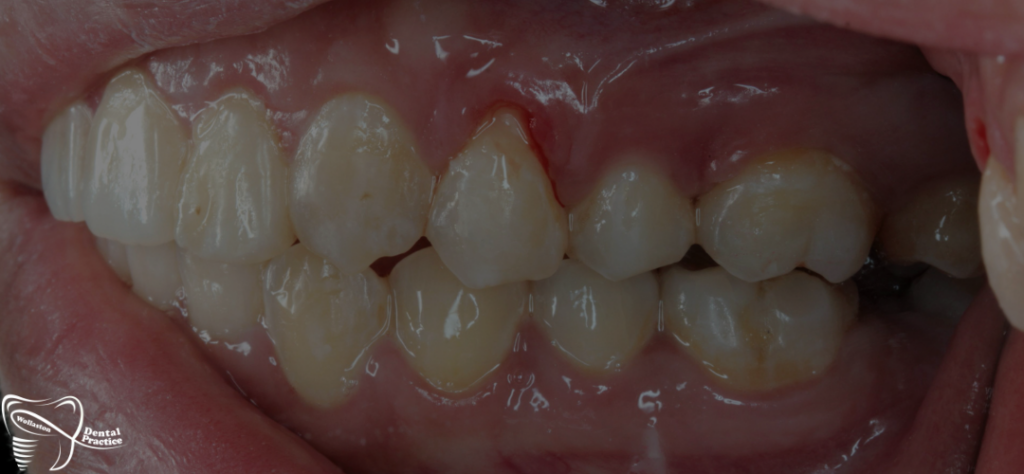
When it does bleed, the gum tissue is already inflamed: swollen, red, and engorged with blood vessels brought in by the immune response. This state, called gingivitis, is caused almost exclusively by the accumulation of plaque at and below the gum line.
Here is the mechanism. Plaque is a biofilm of bacteria that forms continuously on every tooth surface. Where it is not removed, it matures over 24 to 48 hours, and the bacterial species within it become increasingly pathogenic. The immune system responds to bacterial toxins at the gum line by sending blood to the area, dilating blood vessels, and mounting an inflammatory response. This response is what makes the gum tissue red and swollen.
When you floss and that engorged, inflamed tissue is touched, it bleeds easily, because the blood vessels are close to the surface and the tissue is weakened by the inflammatory process.
So: the floss is not cutting the gum. The floss is touching inflamed tissue that bleeds at minimal provocation, because plaque has been sitting undisturbed in the spaces between the teeth.
The implication is clear. Why do my teeth bleed when I floss is almost always answered by: because the gum tissue around those teeth is inflamed from plaque that the toothbrush has not reached. The solution is consistent, gentle flossing, not stopping.
Why stopping makes it worse
This is the part most people find counterintuitive, but it is clinically straightforward.
When you stop flossing because the gum bleeds, the plaque in the interproximal spaces between the teeth remains there. The inflammation it is causing continues. In many cases, it worsens.
When you resume flossing after a break, the gum bleeds again, perhaps more than before, because the inflammation has had more time to develop. This creates a cycle: floss, bleeding, stop, resume, bleeding, stop. Each time the flossing is abandoned, the cycle restarts from a worse baseline.
The way to break the cycle is to continue flossing despite the bleeding. Within ten to fourteen days of consistent daily flossing, the plaque is being disrupted before it can fully mature. The immune response reduces. The blood vessel engorgement decreases. The gum tissue firming and becomes less reactive. And the bleeding reduces or stops entirely.
This is one of the most consistent findings in dental hygiene research: patients who develop a consistent interdental cleaning habit see measurable reductions in gum bleeding within two weeks, even without any professional treatment.
When it is something other than simple gingivitis
The above explains the most common cause of why gums bleed when flossing. But there are other causes that are worth knowing about, particularly when the bleeding is heavy, does not improve with consistent flossing, or is accompanied by other symptoms.
Gum disease (periodontitis)
Gingivitis is the reversible early stage of gum disease: the inflammation is confined to the gum tissue and causes no permanent damage. If gingivitis is not addressed, it can progress to periodontitis, where the infection extends below the gum line and begins to destroy the bone and connective tissue supporting the teeth.
In periodontitis, the bleeding on flossing is typically more pronounced, and the gum tissue looks more dramatically red or purple and may have receded visibly. Pockets form between the gum and the tooth root, and these pockets harbour the bacteria driving the disease in a location that standard brushing and flossing cannot adequately reach.
At this stage, home care alone is not sufficient. A dental hygienist appointment involving root surface debridement, where the root surfaces beneath the gum line are professionally cleaned, is necessary to remove the hardened deposits (calculus) driving the disease. This is then maintained with regular hygiene appointments at intervals appropriate to the severity of the condition.
The distinction between gingivitis and periodontitis is made at a dental check-up: gum pocket depths are measured around every tooth, and X-rays assess bone levels. This is why gum health assessment is a standard component of a thorough check-up, not an optional extra.
Starting flossing for the first time
If you have not flossed regularly and then begin, the gum tissue in the interdental spaces is almost certainly inflamed from the accumulated plaque, even if you are not aware of any gum problem. First-time or returned flossers almost always experience some bleeding for the first one to two weeks.
This is not alarming, provided the bleeding is moderate and reduces with consistent effort. It is the expected response to introducing cleaning in an area that was previously unclean.
Incorrect technique
Flossing too aggressively, sawing the floss back and forth at the gum line, or snapping it down sharply onto the gum can cause direct trauma to the tissue that causes bleeding even in relatively healthy gums.
The correct technique, covered in detail below, involves gentle C-shaped motion hugging the tooth, not cutting action at the gum margin.
Blood-thinning medications
Patients taking anticoagulant medications (warfarin, apixaban, rivaroxaban) or antiplatelet drugs (aspirin, clopidogrel) have a reduced ability to clot normally. This means that even healthy, minimally inflamed gum tissue may bleed more readily and more persistently during flossing than it would in the absence of these medications.
This does not mean stopping flossing. Gum health is important for patients on anticoagulants, partly because gum disease has systemic associations that matter more when cardiovascular health is already a concern. It does mean mentioning the medications to your dental team so that any clinical procedures are planned accordingly.
If you are on blood thinners and notice significantly increased bleeding during flossing, mention it at your next dental check-up.
Vitamin C deficiency
Vitamin C is essential for collagen synthesis, including the collagen in gum tissue. Scurvy, the condition of severe vitamin C deficiency, is now rare in the UK, but moderate deficiency is more common than people assume, particularly in patients with restricted diets or malabsorption issues. One of the early features of vitamin C insufficiency is easy gum bleeding.
If your gums bleed very easily, bruise appears on the skin more readily than expected, and your diet is low in fresh fruit and vegetables, nutritional deficiency is worth considering and discussing with a GP.
Vitamin K deficiency
Vitamin K is central to the blood clotting cascade. Deficiency, which can occur with certain gastrointestinal conditions, long-term antibiotic use, or very restrictive diets, reduces clotting efficiency and increases bleeding tendency throughout the body, including in the gums.
Pregnancy gingivitis
Hormonal changes during pregnancy significantly alter the gum tissue’s response to plaque. Progesterone in particular increases blood flow to the gums and changes the local immune response in a way that makes existing plaque deposits cause a much stronger inflammatory reaction. The result is that gums during pregnancy are often more swollen, more red, and more prone to bleeding during flossing and brushing, even in women with good oral hygiene.
Pregnancy gingivitis is common and clinically recognised. It does not mean something is seriously wrong, but it does mean that dental hygiene care during pregnancy is particularly important. A dental hygienist appointment during pregnancy is both safe and recommended: professional cleaning during this period reduces the severity of the hormonal response on the gum tissue.
Poorly fitting restorations
Dental crowns, bridges, fillings or other restorations that have rough margins, overhangs, or incorrect contact relationships with adjacent teeth can create areas where plaque accumulates despite thorough cleaning. Localised bleeding when flossing specifically in one area may reflect a problem with an existing restoration rather than generalised gum disease.
If bleeding is consistently in the same location and does not improve with technique correction, a dental check-up can assess whether a restoration is contributing to the problem.
The correct flossing technique
One of the most consistent contributors to ineffective flossing is simply using the wrong technique. The method that removes plaque reliably without damaging the tissue is specific and worth describing precisely.
- Step 1: the right length. Use approximately 40 to 45 centimetres of floss. Wind most of it around the middle fingers of both hands, leaving a few centimetres to work with. As each section becomes plaque-coated, advance fresh floss.
- Step 2: guide it, not snap it. Gently guide the floss between the teeth using a zigzag motion. Avoid snapping it down sharply, which can cut the gum tissue and cause bleeding from direct trauma.
- Step 3: the C-shape. Once the floss reaches the gum line, curve it into a C-shape against one tooth surface. Slide it gently into the gum pocket until you feel slight resistance: approximately 1 to 2 millimetres below the visible gum margin. This is where plaque accumulates at the base of the gum pocket.
- Step 4: clean the surface. With the floss hugging the tooth in the C-shape, move it up and down two to three times against the tooth surface. This removes the plaque from both the tooth surface and the gum pocket wall.
- Step 5: do the same on the adjacent tooth. The same space between two teeth has two surfaces: one from each neighbouring tooth. Curve the floss against the second tooth and repeat the motion.
- Step 6: move systematically. Work through every space in the mouth from one end to the other, using a fresh section of floss for each space.
- Interdental brushes as an alternative. For patients with wider interdental spaces, due to gum recession or larger natural gaps, interdental brushes clean more effectively than floss in those specific spaces. A dental hygienist can advise on whether floss, interdental brushes, or a combination is appropriate for the specific spaces in your mouth.
When to seek professional care for bleeding gums
The consistent reduction of bleeding over ten to fourteen days of daily flossing suggests simple gingivitis from plaque that is now being effectively managed. No urgent intervention needed, though a dental check-up should still be attended at the usual six-monthly interval.
Book a dental check-up sooner if:
Bleeding is heavy and does not begin to reduce after two weeks of consistent flossing
Gums look visibly red, purple or significantly swollen
Teeth appear to be getting longer: this is gum recession, which accompanies bone loss in periodontitis
There is a persistent bad taste, or bad breath that does not resolve with brushing and flossing
Any tooth is noticeably mobile or has shifted position
Book an emergency appointment if:
Bleeding is unusually heavy and not settling after applying gentle pressure with gauze or a clean cloth
Swelling is spreading toward the jaw or face
Pain is severe alongside gum bleeding
You suspect an abscess: visible swelling, a bad taste, fever
The emergency dental service at Wollaston Dental Practice is available for exactly these situations. Our fees, including emergency appointment costs, are listed transparently on our fees page.
What the hygienist can do that flossing alone cannot
Consistent home flossing removes the soft plaque that accumulates daily. It does not remove calculus: the hardened, mineralised deposits (tartar) that form when plaque is left in place for long enough to mineralise. Calculus cannot be removed by any toothbrush, floss or interdental brush. It requires professional scaling with specialist instruments.
Calculus at and below the gum line is one of the primary drivers of gum disease progression. Its rough, porous surface is the ideal habitat for the bacteria that cause periodontitis, and its presence under the gum line maintains a chronic inflammatory state that no amount of brushing and flossing can resolve.
A dental hygienist appointment removes this calculus, allows the gum tissue to recover, and gives a precise assessment of gum pocket depths and gum health that informs whether more treatment is needed. For patients with simple gingivitis, a hygiene appointment combined with consistent home care is often all that is needed to restore completely healthy gum tissue. For patients with established periodontitis, a course of hygienist treatment across several appointments is the clinical response.
The bottom line
Why do my gums bleed when I floss? In the great majority of cases: because the gum tissue is inflamed from plaque that has accumulated in the interdental spaces the toothbrush does not reach. The floss is not causing the bleeding. It is revealing inflammation that was already there.
Why do my teeth bleed when I floss? Same answer: the gum tissue surrounding the teeth is reacting to bacterial accumulation with inflammation that makes it bleed easily on contact.
Why do gums bleed when flossing and then stop when you stop flossing? Because stopping allows the plaque to continue undisturbed, the inflammation to continue, and then when you resume, the already-inflamed tissue bleeds again.
The right response is to continue flossing consistently and gently, using the correct technique, every day. Within two weeks, bleeding should reduce significantly. If it does not, or if other signs suggest something more than simple gingivitis, a dental check-up and hygienist appointment is the appropriate next step.
At Wollaston Dental Practice at 27 High Street, Wollaston, Stourbridge, DY8 4NJ, call 01384 438 143 if you would like to book a check-up or ask about what treatment is right for you.
Disclaimer
The information in this article is intended for general educational guidance only and does not constitute personalised dental advice. For concerns about bleeding gums or gum health, please book an appointment with a qualified dental professional for a proper clinical assessment.
Wollaston Dental Practice is a private dental practice at 27 High Street, Wollaston, Stourbridge, DY8 4NJ, led by Dr Mohammed Ihsan GDC No. 304200, member of the Association of Dental Implantology and Master’s graduate in Dentistry from the University of Szeged. We offer dental check-ups, hygienist appointments, emergency dental appointments, root canal treatment, tooth extractions, dental implants, Invisalign, composite bonding, porcelain veneers, teeth whitening, dental crowns, smile makeovers and facial aesthetics. Call 01384 438 143.
Frequently asked questions
Why do my gums bleed when I floss even though I floss regularly?
If you floss regularly and still experience bleeding, the most likely explanations are: the technique is not effectively removing plaque from below the gum margin, calculus has built up in the interdental spaces that floss cannot remove, or there is underlying gum disease that requires professional treatment. A dental hygienist appointment will assess gum pocket depths, identify calculus that needs professional removal, and review your flossing technique. Regular bleeding despite regular flossing is a signal to attend for professional assessment, not to assume that flossing is causing harm.
Why do my teeth bleed when I floss but not when I brush?
The spaces between the teeth are areas that toothbrush bristles cannot adequately reach. Plaque accumulates in these spaces and the gum tissue alongside them becomes inflamed, but because brushing does not contact this tissue, no bleeding occurs during brushing. Flossing reaches into these interproximal spaces and contacts the inflamed gum margin, which is why bleeding occurs with flossing that does not occur with brushing. The solution is consistent daily flossing: once the interproximal plaque is being regularly disrupted, the gum inflammation reduces and the bleeding resolves.
Why do gums bleed when flossing during pregnancy?
Pregnancy hormones, particularly progesterone, increase blood flow to the gum tissue and alter the local immune response, making the gums react more dramatically to existing plaque. This pregnancy gingivitis means that even patients with good oral hygiene may notice increased bleeding during flossing. Continue flossing: stopping will worsen the plaque situation and the associated inflammation. A dental hygienist appointment during pregnancy is safe and recommended, and professional cleaning during this period reduces the severity of the hormonal response on the gum tissue.
Could medication be causing my gums to bleed when I floss?
Yes, in some cases. Anticoagulant medications (such as warfarin, apixaban and rivaroxaban) and antiplatelet drugs (including aspirin and clopidogrel) reduce the normal clotting response, which means gum tissue bleeds more readily and more persistently than it would otherwise. Some calcium channel blockers used for blood pressure can also cause gum tissue overgrowth, which makes the interproximal spaces harder to clean and more prone to plaque accumulation. Mention all current medications at your dental check-up so the clinical team can interpret your gum health in the appropriate context.
When should I see a dentist urgently about bleeding gums?
Book an emergency appointment if: the bleeding is unusually heavy and does not slow with gentle pressure from gauze or a clean cloth; there is significant swelling of the gum, cheek or jaw alongside the bleeding; there is severe pain; or you suspect an abscess from a bad taste, visible swelling or fever. These symptoms go beyond the expected response to plaque and suggest an infection or other acute condition requiring prompt assessment. The emergency dental service at Wollaston Dental Practice is available for situations that cannot wait. Our appointment fees are listed on our fees page.